

Indiaspora 250 at 250
As America celebrates her 250th birthday and we hear her varied carols singing, Indiaspora is proud to highlight the vital contributions of Indian Americans. For generations, Indian Americans have walked hand in hand with fellow citizens to shape our nation's story, and their journey is deeply woven into our shared history. Here we spotlight these enduring connections.
Moments
This is our story. Trace the moments that shaped us.

A Generation of Indian American CEOs Reshapes Corporate America
A Generation of Indian American CEOs Reshapes Corporate America
Beginning with Ramani Ayer’s appointment as CEO of The Hartford in 1997 and Raj Gupta as CEO of Rohm & Hass in 1999, a growing number of Indian American executives rose to lead some of the world’s most influential corporations. Satya Nadella transformed Microsoft’s growth trajectory, while Sundar Pichai assumed leadership of Google and its global technology platforms. Today, Indian-origin CEOs lead sixteen Fortune 500 companies and oversee millions of employees worldwide. Their rise marked a significant shift in American corporate leadership, placing members of the Indian diaspora at the helm of companies that shape global commerce, technology, and economic activity.
Related People
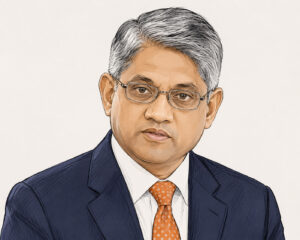
Ramani Ayer
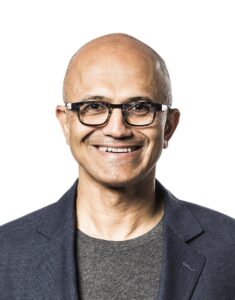
Satya Nadella
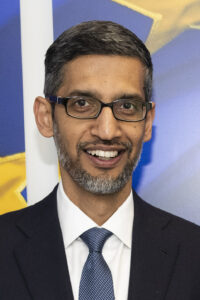
Sundar Pichai
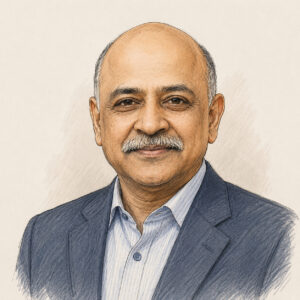
Arvind Krishna
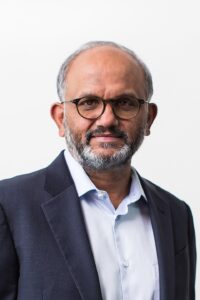
Shantanu Narayen
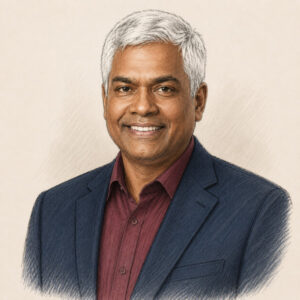
George Kurian
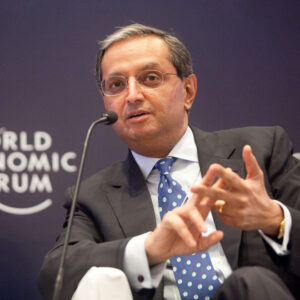
Vikram Pandit
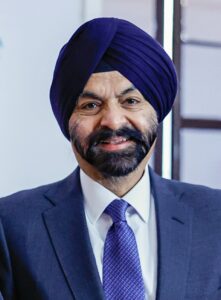
Ajay Banga

Nikesh Arora

Revathi Advaithi
Reshma Kewalramani

Raj Subramaniam
Vimal Kapur
Rajat Gupta
Ramani Ayer
Ramani Ayer became the first Indian American to lead a Fortune 500 financial services company when he assumed leadership of The Hartford. During his tenure, he guided one of America's largest insurance and financial services firms through a period of growth and industry change. His appointment marked a significant breakthrough in corporate leadership, demonstrating that Indian Americans could rise to the highest levels of the financial sector. Ayer's success helped expand opportunities for future generations of executives and contributed to the growing presence of Indian-origin leaders in corporate America.
Satya Nadella
Mentioned in EB15
Sundar Pichai
Sundar Pichai became CEO of Google in 2015 and later assumed leadership of Alphabet, overseeing one of the most influential technology companies in the world. He directed products and platforms used by billions of people, including Google Search, Android, Chrome, and YouTube. Under his leadership, Google remained a central force in the global digital economy and the development of emerging technologies such as artificial intelligence. Pichai's role placed him among the most powerful figures in technology and highlighted the growing influence of Indian-origin executives in shaping the modern information age.
Arvind Krishna
Arvind Krishna became CEO of IBM and led one of the most storied technology companies in American business. He directed the company's transformation toward hybrid cloud computing and artificial intelligence, helping reposition IBM within a rapidly changing technology landscape. Under his leadership, the firm continued to play a significant role in enterprise computing, research, and digital infrastructure. Krishna's appointment reflected the growing presence of Indian-origin executives at the highest levels of corporate leadership and underscored their influence in shaping the future of global technology.
Shantanu Narayen
Shantanu Narayen led Adobe through a period of extraordinary growth and transformation, turning the company into a dominant force in digital media and creative software. Under his leadership, Adobe successfully shifted from packaged software to a cloud-based subscription model, reshaping how creative professionals accessed and used its products. The transition helped drive the company's expansion and strengthened its position as a global technology leader. Narayen's success demonstrated the strategic influence of Indian-origin executives in guiding major corporations through industry-defining technological change.
George Kurian
George Kurian led NetApp as CEO and helped strengthen its position as a leading provider of enterprise data management and cloud infrastructure solutions. Under his leadership, the company expanded its capabilities to meet the growing demand for data storage, cloud services, and digital transformation technologies. His work helped organizations manage and secure increasingly complex information systems in a data-driven economy. Kurian's success reflected the growing influence of Indian-origin executives in shaping the infrastructure that supported modern enterprise computing.
Vikram Pandit
Vikram Pandit led Citigroup during one of the most challenging periods in modern financial history, overseeing the institution through the aftermath of the global financial crisis. He played a central role in restructuring the company, stabilizing operations, and restoring investor confidence in one of the world's largest banking organizations. His leadership placed an Indian-origin executive at the center of global finance during a pivotal moment for the industry. Pandit's tenure highlighted the increasing presence of Indian Americans in the highest ranks of corporate and financial leadership.
Ajay Banga
Ajay Banga led Mastercard and helped expand its role as one of the world's largest payments technology companies. Under his leadership, the company accelerated digital payments adoption, expanded globally, and advanced financial inclusion initiatives that brought more people into the formal financial system. His work helped shape the evolution of digital commerce and the future of global payments. Banga's success demonstrated the growing influence of Indian-origin executives in directing multinational corporations that played a critical role in the global economy.
Nikesh Arora
Nikesh Arora led Palo Alto Networks through a period of significant growth, strengthening its position as a global leader in cybersecurity. Under his leadership, the company expanded its capabilities across cloud security, network protection, and digital infrastructure, helping organizations respond to increasingly sophisticated cyber threats. His work contributed to the development of technologies that protected businesses, governments, and institutions around the world. Arora's success reflected the growing role of Indian-origin executives in leading companies at the forefront of critical technology sectors.
Revathi Advaithi
Revathi Advaithi led Flex, one of the world's largest manufacturing and supply chain companies, overseeing operations that supported major global brands across multiple industries. Under her leadership, the company expanded its focus on advanced manufacturing, technology integration, and sustainability. Her work helped strengthen complex global production networks that connected innovation, design, and large-scale manufacturing. Advaithi's success demonstrated the increasing influence of Indian-origin executives in managing multinational enterprises that played a vital role in the global economy.
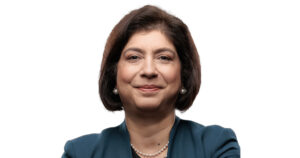
Reshma Kewalramani
Reshma Kewalramani became the CEO of Vertex Pharmaceuticals and helped guide one of the biotechnology industry's leading innovators. Under her leadership, the company advanced the development and commercialization of treatments for serious diseases, translating scientific research into therapies that improved patient outcomes. Her role placed her at the intersection of medicine, science, and business, overseeing the growth of a major biotechnology enterprise. Kewalramani's success expanded representation in both corporate leadership and life sciences, demonstrating the growing influence of Indian-origin executives in healthcare innovation.
Raj Subramaniam
Raj Subramaniam became CEO of FedEx and assumed responsibility for one of the world's largest logistics and transportation networks. He oversaw operations spanning hundreds of countries and territories, managing the movement of goods that supported global trade and commerce. His leadership came at a time when supply chains and delivery infrastructure had become increasingly central to the world economy. Subramaniam's appointment reflected the growing presence of Indian-origin executives in leadership roles at companies that powered critical global systems and economic activity.
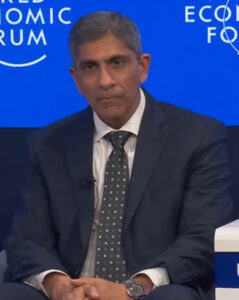
Vimal Kapur
Vimal Kapur became CEO of Honeywell, leading a multinational company with operations spanning aerospace, industrial automation, energy, and advanced technologies. He oversaw a business whose products and systems played a significant role in manufacturing, transportation, infrastructure, and global industry. His leadership reflected the increasing influence of Indian-origin executives in directing large-scale industrial enterprises that shaped the modern economy. By guiding one of America's most established corporations, Kapur contributed to the growing visibility of Indian Americans at the highest levels of business leadership.
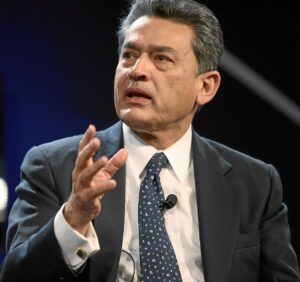
Rajat Gupta
Mentioned in EB15
A New Era for American Energy: The Launch of ARPA-E
A New Era for American Energy: The Launch of ARPA-E
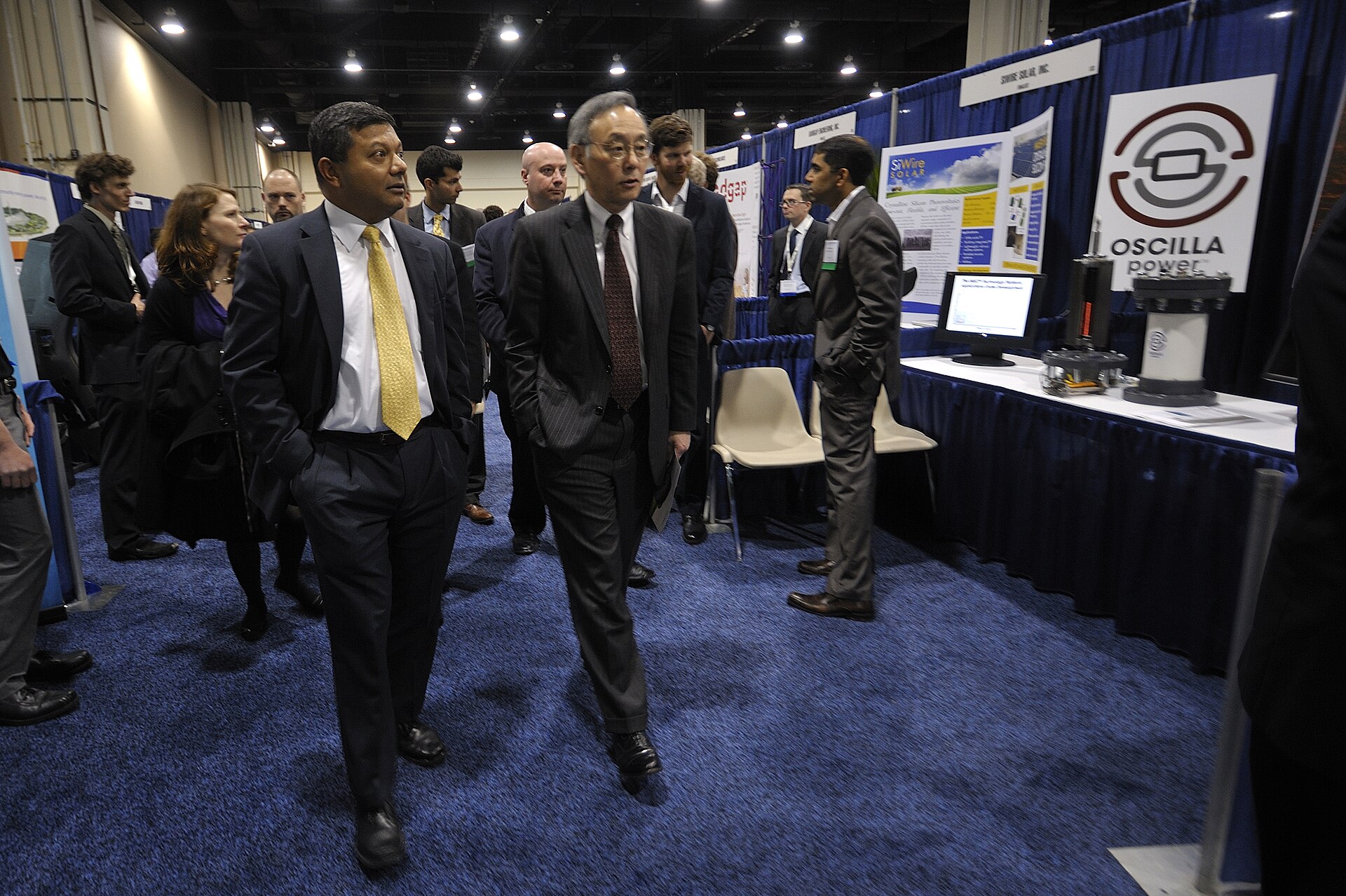
In October 2009, the United States fundamentally revolutionized its approach to the climate crisis when brilliant engineer Dr. Arun Majumdar became the founding Director of ARPA-E. Tasked by President Obama to build a new federal agency from scratch, Majumdar established a hyper-agile engine for high-risk, high-reward clean energy breakthroughs. By bridging the notorious gap between laboratory research and commercial markets, he directed critical capital toward radical concepts in advanced batteries, smart grids, and carbon capture. His leadership permanently transformed American infrastructure, proving that government-backed scientific innovation could rapidly accelerate the nation’s transition toward a scalable green economy. As of mid-2026, ARPA-E has funded over 1,700 cutting-edge energy projects, generated more than 1,400 patents, and spurred the creation of 154 new companies. It successfully bridged the “valley of death” for early-stage tech, attracting over $12 billion in private sector follow-on investment.
Related People

Dr. Arun Majumdar
Dr. Arun Majumdar
Arun Majumdar is a distinguished materials scientist and engineer currently serving as the inaugural dean of the Stanford Doerr School of Sustainability. A prominent leader in energy policy and technology, he was the first director of the Advanced Research Projects Agency-Energy (ARPA-E). Majumdar has held senior roles at the Lawrence Berkeley National Laboratory and Google, focusing on energy initiatives and strategy. An expert in thermal engineering, he is a member of the National Academy of Engineering. His career reflects a deep commitment to addressing global climate challenges through innovation, research, and high-level government advisory roles in the United States.

A New Generation of Indian Origin Musicians Reshapes American Concert Halls
A New Generation of Indian Origin Musicians Reshapes American Concert Halls
A new generation of Indian-origin musicians reshaped American musical institutions by moving beyond performance into composition, innovation, and cultural leadership. Vijay Iyer transformed contemporary jazz through the integration of Indian rhythmic traditions, while Vijay Gupta expanded access to classical music through community-based performance. Reena Esmail bridged Hindustani and Western classical traditions through works commissioned by major orchestras, and Anoushka Shankar carried the sitar into contemporary concert culture for new audiences. Together, they established Indian-origin musicians as influential creative voices within American musical life, helping redefine the sound, scope, and cultural reach of major artistic institutions.
Related People

Vijay Iyer
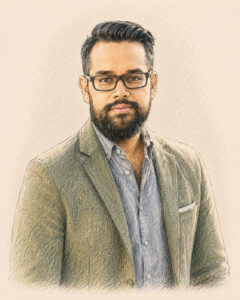
Vijay Gupta

Reena Esmail

Anoushka Shankar
Vijay Iyer
Vijay Iyer emerged as one of the most influential figures in contemporary American jazz, blending improvisation, composition, and Indian rhythmic traditions into a distinctive musical language. His work challenged conventional boundaries between genres while expanding the possibilities of modern jazz performance and scholarship. In 2013, he received a MacArthur Fellowship in recognition of his artistic innovation and cultural impact. Through acclaimed recordings, compositions, and performances, Iyer helped redefine contemporary jazz and established himself as a leading voice in American music.
Vijay Gupta
Vijay Gupta combined artistic excellence with social engagement to expand the role of classical music in public life. A violinist and founder of Street Symphony, he brought live performances and music education to incarcerated, unhoused, and marginalized communities in Los Angeles. His work challenged traditional assumptions about who classical music was for and where it belonged. In 2018, he received a MacArthur Fellowship for using music as a tool for human connection and social change. Gupta's leadership broadened the cultural mission of American classical music institutions.
Reena Esmail
Reena Esmail built a distinctive compositional career by bringing together Hindustani and Western classical traditions. Through works commissioned and performed by major orchestras, choirs, and chamber ensembles, she created new musical forms that drew from both traditions without subordinating either. Her compositions introduced American audiences to innovative cross-cultural collaborations while expanding the repertoire of leading musical institutions. As composer-in-residence with major orchestras and arts organizations, Esmail helped establish intercultural composition as a significant force within contemporary American classical music.
Anoushka Shankar
Anoushka Shankar carried the sitar into contemporary global concert culture while expanding the artistic legacy of Indian classical music. Through acclaimed recordings, international tours, and multiple Grammy-nominated projects, she introduced new audiences to the instrument while exploring collaborations that bridged classical, contemporary, and world music traditions. Her work demonstrated that Indian classical music could remain rooted in tradition while engaging with modern artistic forms and global audiences. As one of the most visible Indian-origin musicians in the world, Shankar helped strengthen the presence of South Asian musical traditions within American concert life.

A Wave of Chefs and Writers Prove Regional Indian Cuisines Need No Compromise
A Wave of Chefs and Writers Prove Regional Indian Cuisines Need No Compromise
A new generation of chefs and food writers demonstrated that regional Indian cuisines could succeed in America without being simplified or adapted for mainstream expectations. Asha Gomez introduced Kerala cuisine to Southern audiences, Niloufer Ichaporia King documented Parsi culinary traditions for English-language readers, and Chintan Pandya and Roni Mazumdar brought unapologetically regional flavors to New York through Dhamaka. Meherwan Irani further expanded the reach of regional Indian food through his restaurants and culinary leadership. Together, they proved that authenticity and commercial success were not mutually exclusive, expanding American appreciation for the diversity of Indian cuisine.
Related People

Asha Gomez

Niloufer Ichaporia King

Chintan Pandya

Roni Mazumdar

Meherwan Irani
Asha Gomez
Asha Gomez introduced the flavors of Kerala to American diners through her Atlanta restaurant, Cardamom Hill. Drawing on her South Indian heritage and her adopted home in the American South, she highlighted unexpected connections between the two culinary traditions, including their shared use of spices, rice, and seafood. Her work broadened awareness of regional Indian cuisine beyond familiar restaurant staples and demonstrated the richness and diversity of South India's food culture. Gomez helped create new possibilities for Indian cuisine within the American dining landscape.
Niloufer Ichaporia King
Niloufer Ichaporia King preserved and documented Parsi culinary traditions through her influential cookbook My Bombay Kitchen. Combining recipes, history, and cultural commentary, she introduced English-speaking audiences to one of South Asia's most distinctive regional cuisines. Her work helped safeguard culinary knowledge that might otherwise have been lost or overlooked while expanding understanding of the diversity within Indian food traditions. By documenting Parsi cooking with exceptional depth and detail, King made an important contribution to both food scholarship and cultural preservation.
Chintan Pandya
Chintan Pandya helped redefine American perceptions of Indian food through his work as chef and co-founder of Dhamaka in New York. Rejecting watered-down interpretations of Indian cuisine, he built menus centered on bold regional dishes, robust spice profiles, and lesser-known culinary traditions. His cooking challenged diners to engage with Indian food on its own terms rather than through familiar expectations. Through critical acclaim and commercial success, Pandya demonstrated that uncompromising regional Indian cuisine could thrive at the highest levels of the American restaurant industry.
Roni Mazumdar
Roni Mazumdar transformed the landscape of Indian dining in America by championing authentic regional cuisines through a growing portfolio of restaurants. Working closely with chef Chintan Pandya, he helped build a hospitality group that challenged conventional ideas about what Indian restaurants could be. Their success proved that diners would embrace highly specific regional traditions without requiring simplification or adaptation. By pairing culinary ambition with strong business execution, Mazumdar helped expand the commercial viability and cultural influence of Indian food in the United States.
Meherwan Irani
Meherwan Irani elevated Indian street food within American dining culture through Chai Pani, his celebrated restaurant in Asheville, North Carolina. By presenting regional snacks and everyday dishes with authenticity and creativity, he introduced many Americans to flavors rarely represented in mainstream Indian restaurants. The restaurant's success culminated in a James Beard Award for Outstanding Restaurant, one of the industry's highest honors. Irani's achievements demonstrated that casual Indian food traditions could earn national acclaim and helped broaden appreciation for the diversity of Indian cuisine.

A Wave of Indian Gurus Transform American Spiritual and Cultural Life
A Wave of Indian Gurus Transform American Spiritual and Cultural Life
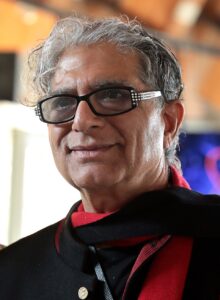
From the late 1960s onward, Indian spiritual teachers transformed American understandings of health, meditation, and personal wellbeing. They introduced practices including meditation, breathwork, yoga, and Ayurveda to mainstream audiences, reframing ancient traditions as accessible tools for modern life. The movement reached millions of Americans in 1993 when Deepak Chopra appeared on The Oprah Winfrey Show, bringing Ayurvedic medicine and mind-body wellness into popular culture. Their teachings permanently reshaped America’s wellness movement and broadened public engagement with Indian philosophical traditions.
Related People
Deepak Chopra
Deepak Chopra
Deepak Chopra is an American physician, author, and wellness advocate. Beginning in the late twentieth century, he popularized Ayurveda, meditation, and mind-body medicine for mainstream American audiences through bestselling books, lectures, and television appearances. His 1993 appearance on The Oprah Winfrey Show introduced millions of Americans to holistic approaches to health and spirituality. Chopra has remained one of the most influential public voices linking modern medicine, wellbeing, and Indian philosophical traditions.
A.K. Ramanujan Brings Classical South Asian Literature into the American Academy
A.K. Ramanujan Brings Classical South Asian Literature into the American Academy
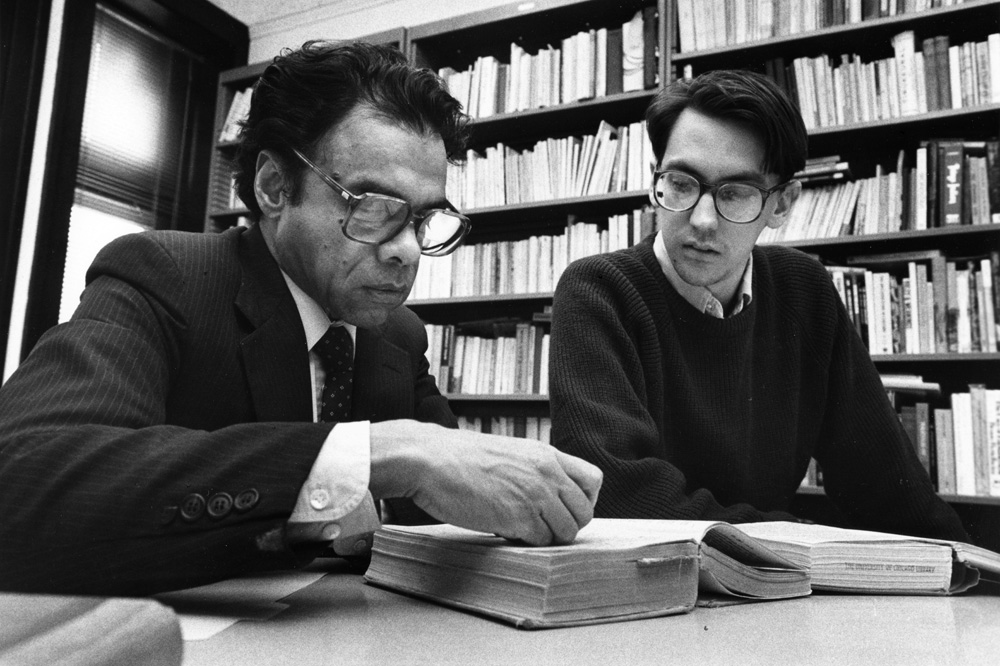
A.K. Ramanujan’s translations of classical Tamil, Kannada, and Sanskrit texts introduced South Asian literary traditions to generations of American scholars. Works including Speaking of Siva, Poems of Love and War, and The Interior Landscape became foundational texts in American universities. His essay Three Hundred Ramayanas reshaped how scholars approached mythology, religion, and textual traditions, permanently expanding the study of world literature within the American academy.
Related People
A.K. Ramanujan
A.K. Ramanujan
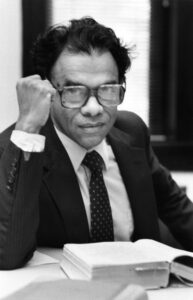
A.K. Ramanujan was a poet, translator, folklorist, and scholar whose work transformed the study of South Asian literature in the United States. During a distinguished career at the University of Chicago, he introduced generations of American students to classical Tamil, Kannada, and Sanskrit texts through acclaimed translations and literary criticism. His scholarship reshaped the fields of comparative literature, folklore, linguistics, and religious studies, establishing South Asian literary traditions as an essential part of the American academy. In 1983, he was given the MacArthur Prize Fellowship (also known as the "Genius Grant").

AAPI Founded, Wins Formal AMA Representation for Indian Physicians
AAPI Founded, Wins Formal AMA Representation for Indian Physicians
Indian physicians founded the American Association of Physicians of Indian Origin (AAPI) to combat discrimination in residency placements, licensing, and professional advancement. After more than a decade of advocacy, the organization secured the creation of the International Medical Graduates Section within the American Medical Association in 1996. The reform gave internationally trained physicians a formal voice and voting representation within the nation’s largest medical organization. It marked a turning point in the integration of immigrant doctors into American medicine and strengthened the influence of physicians of Indian origin across the U.S. healthcare system.
Related People
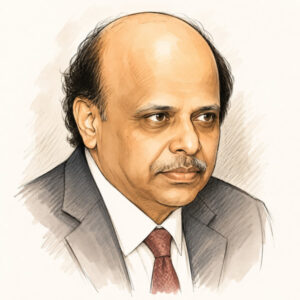
Dr. Ujamlal Kothari
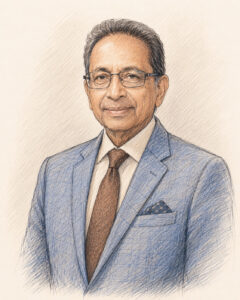
Dr. Navin Shah
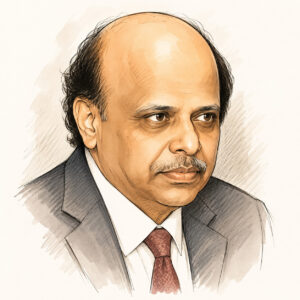
Dr. Jagan Kakarala
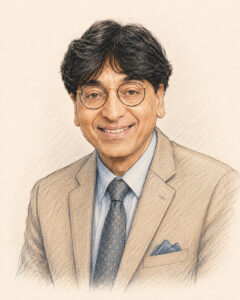
Dr. Suvas Desai
Dr. Ujamlal Kothari
Dr. Ujamlal Kothari was a founding leader of the American Association of Physicians of Indian Origin (AAPI). Recognizing the barriers faced by internationally trained physicians, he helped unite Indian American doctors into a national professional organization dedicated to advocacy, mentorship, and public service. His leadership laid the institutional foundation for AAPI's campaign to secure greater representation for international medical graduates within organized medicine and strengthened the voice of immigrant physicians across the United States.
Dr. Navin Shah
Dr. Navin Shah was a founding member of the American Association of Physicians of Indian Origin and a leading advocate for internationally trained physicians. He worked to address inequities in medical licensing, residency opportunities, and professional recognition, while helping build AAPI into one of the nation's largest ethnic medical organizations. His advocacy contributed to the successful effort to establish formal representation for international medical graduates within the American Medical Association.
Dr. Jagan Kakarala
Dr. Jagan Kakarala was an early leader of the American Association of Physicians of Indian Origin who championed the professional advancement of immigrant physicians in the United States. Through advocacy, coalition building, and organizational leadership, he helped challenge longstanding barriers facing internationally trained doctors. His work contributed to expanding opportunities for foreign medical graduates and strengthening their representation within America's leading medical institutions.
Dr. Suvas Desai
Dr. Suvas Desai is an Indian American physician and long-time leader of the American Association of Physicians of Indian Origin. He helped expand the organization's national influence through advocacy, professional development, and engagement with the American Medical Association. His leadership contributed to reforms that strengthened the representation of international medical graduates and reinforced AAPI's role as a leading voice for physicians of Indian origin in the United States.

Abhay Bhushan Inducted into the Internet Hall of Fame
Abhay Bhushan Inducted into the Internet Hall of Fame
In 2023, Abhay Bhushan was inducted into the Internet Hall of Fame in recognition of foundational protocols he authored decades earlier. As a graduate student at MIT, he wrote RFC 114, establishing the File Transfer Protocol, and contributed to early email standards that became core building blocks of ARPANET and the modern internet. His career later included leadership roles at Xerox and several technology startups. The honor affirmed his lasting role in shaping the architecture of global digital communication.
Related People
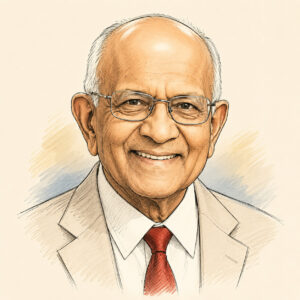
Abhay Bhushan
Abhay Bhushan
Abhay Bhushan is an engineer and technology executive whose early work shaped the architecture of the internet. As an MIT graduate student, he authored foundational protocols for file transfer and electronic mail that became standard tools of ARPANET, the precursor to the modern internet. He later held leadership roles at Xerox and co-founded multiple technology companies. In 2023, the Internet Hall of Fame recognized his contributions to building the digital infrastructure used worldwide today.

Agha Shahid Ali Introduces the Ghazal to American Poetry
Agha Shahid Ali Introduces the Ghazal to American Poetry
During the 1990s, Agha Shahid Ali introduced the classical Persian and Urdu ghazal into mainstream American poetry. Through his own acclaimed collections and a landmark anthology, he demonstrated that the form’s strict structure, recurring refrains, and emotional depth could thrive in English. He also championed the ghazal in universities, workshops, and literary circles, encouraging American poets to engage seriously with its traditions. His efforts expanded the formal possibilities of contemporary American poetry and established the ghazal as a recognized and influential literary form within the American canon.
Related People
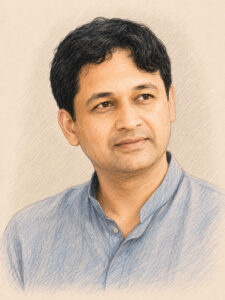
Agha Shahid Ali
Agha Shahid Ali
Agha Shahid Ali transformed American poetry by adapting the classical Persian and Urdu ghazal into English while preserving its formal rigor and artistic complexity. Through his acclaimed poetry collections, literary scholarship, and influential anthology of English-language ghazals, he introduced American readers and writers to a centuries-old poetic tradition. As a teacher and mentor, he championed the form in universities and literary circles, encouraging poets to engage with its structure and possibilities. His work expanded the formal boundaries of contemporary American poetry and established the ghazal as a lasting presence within the American literary canon.
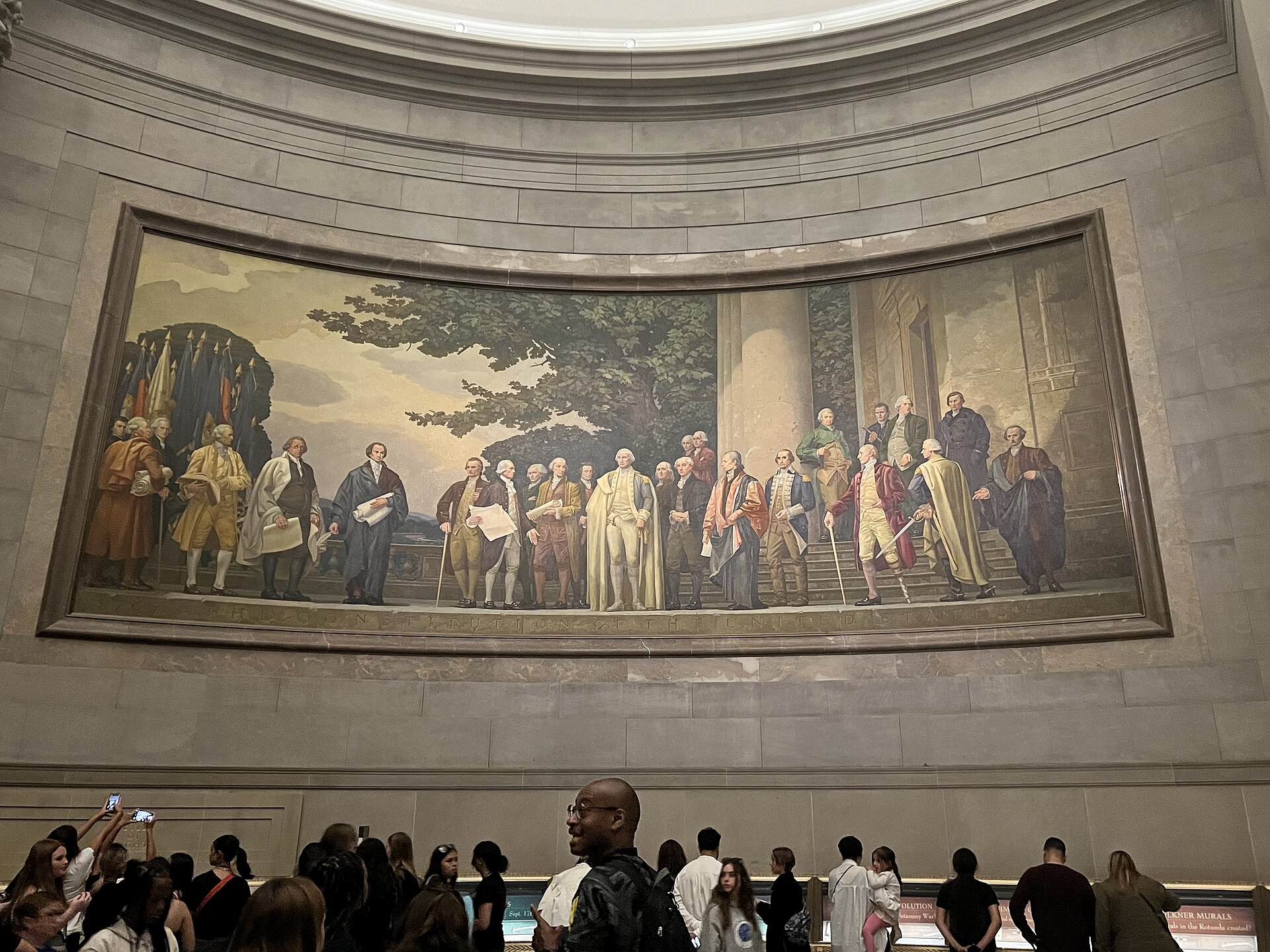
Akhil Reed Amar Reshapes Constitutional Law Scholarship
Akhil Reed Amar Reshapes Constitutional Law Scholarship
Akhil Reed Amar’s constitutional scholarship crossed from the seminar room into the text of Supreme Court opinions, cited by justices across the ideological spectrum. His historical and structural analyses reshaped how American courts approach constitutional interpretation, making structural reasoning and constitutional history central to modern legal discourse. By grounding legal argument in the founding document’s text and structure, his work permanently altered how the bench, bar, and academy understand the U.S. Constitution.
Related People
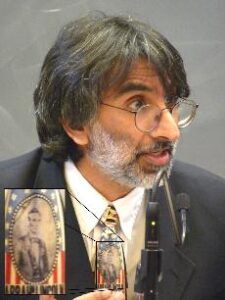
Akhil Reed Amar
Akhil Reed Amar
Akhil Reed Amar is an American constitutional scholar and Sterling Professor of Law at Yale Law School. Over the past three decades, he has produced one of the most widely cited bodies of constitutional scholarship in the United States. His historical and structural analyses have been cited by Supreme Court justices across the ideological spectrum, bridging academic research and judicial decision-making. Through influential books, scholarship, and teaching, Amar has helped shape modern interpretations of the U.S. Constitution and established himself as one of America's foremost constitutional scholars.
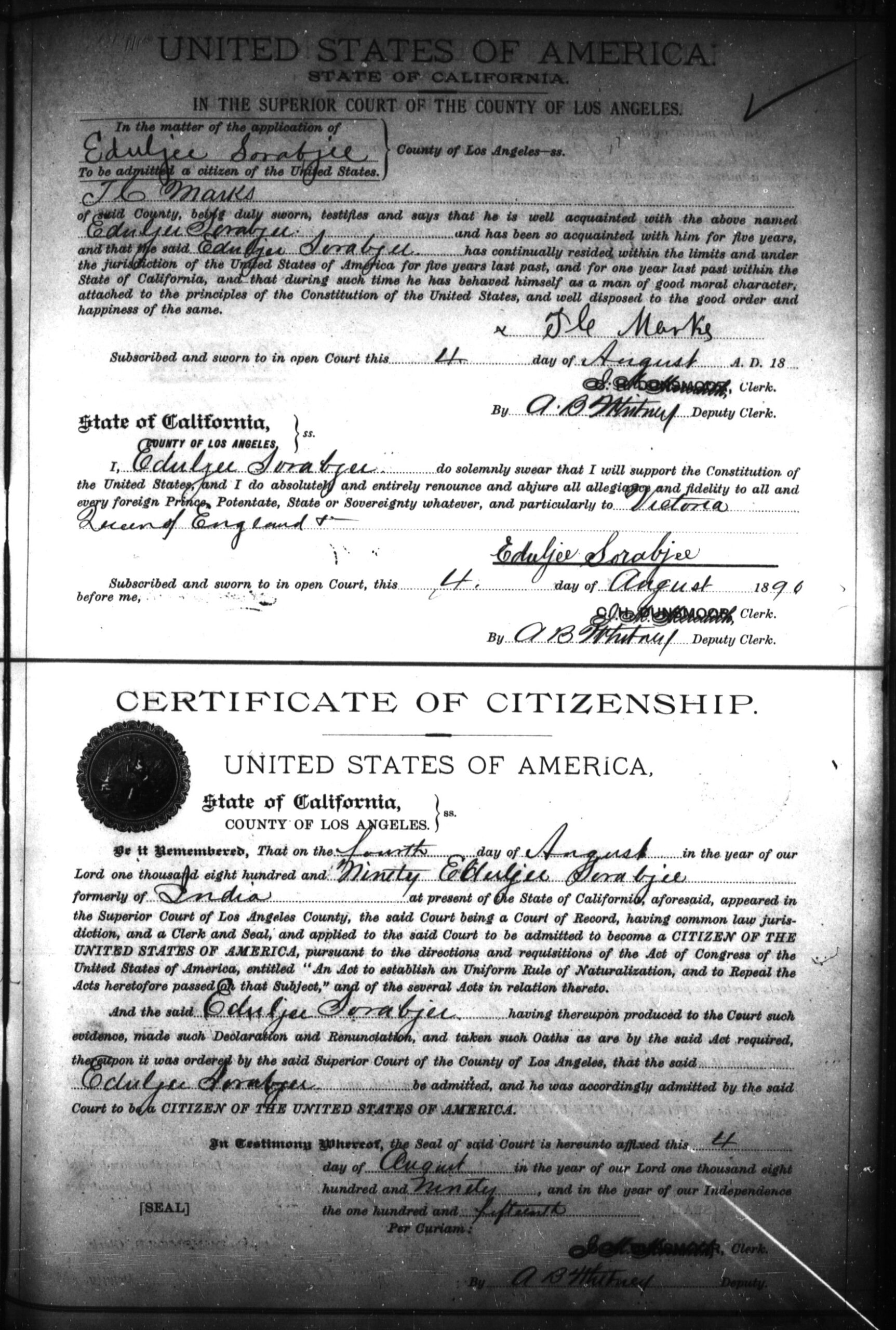
America’s First Naturalized Citizen of Indian Origin
America’s First Naturalized Citizen of Indian Origin
In 1890, Eduljee Sorabjee achieved a rare legal milestone by becoming one of the first South Asian immigrants to acquire American citizenship. Born in Bombay, this Parsi entrepreneur leveraged his business background, extensive travel, and claims of Persian royal heritage to successfully navigate the restrictive Naturalization Act of 1790. While the law generally reserved citizenship for “free white persons,” Sorabjee’s ability to secure his status highlights the legal ambiguity and subjective racial categorizations of the era. This moment remains a historical anomaly, as most Asian immigrants were systematically barred from naturalization for decades until the mid-20th century.
Related People

Eduljee Sorabjee
Eduljee Sorabjee
Born in Bombay, multi-talented engineer and entrepreneur Eduljee Sorabjee settled in Los Angeles in 1885, becoming one of the city’s earliest naturalized Indian-American residents. Sorabjee amassed significant wealth through astute real estate investments in East Los Angeles and dedicated himself to communal welfare, famously organizing local aid campaigns following the devastating 1889 Johnstown flood. His life of altruism concluded with a final act of heroism in 1913, when he died from complications after jumping into a reservoir to save a drowning woman. Obituaries widely celebrated his legacy, honoring him as an “untiring and unselfish friend.”
American India Foundation Signals Diaspora’s Emerging Civic Muscle
American India Foundation Signals Diaspora’s Emerging Civic Muscle
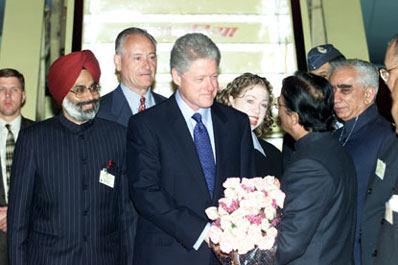
When the American India Foundation was established in 2001 with President Bill Clinton as honorary chair, it marked something larger than a philanthropic organization: it was the first demonstration that the Indian-American diaspora could convene at the highest levels of American civic and political life, mobilize institutional resources, and command the attention of a sitting US president. AIF’s founding signaled that the diaspora had arrived not just as a professional class but as a civic force, organized, resourced, and capable of shaping its own story within American public life.
Related People

Lata Krishnan
Rajat Gupta
Nishant Pandey
Lata Krishnan
Lata Krishnan is a philanthropist and community leader whose charitable work has advanced education, healthcare, and civic engagement. Through sustained support for nonprofit organizations and educational institutions, she has helped strengthen opportunities for underserved communities in both the United States and India. Her leadership emphasizes long-term institutional development, community partnerships, and strategic philanthropy. Krishnan's work reflects the growing contribution of Indian American women to organized philanthropy and public service.
Rajat Gupta
Mentioned in EB15
Nishant Pandey
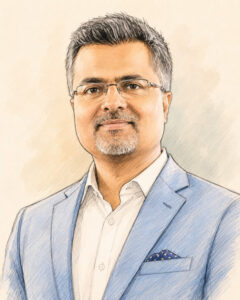
Nishant Pandey is the Chief Executive Officer of the American India Foundation (AIF), one of the world’s leading diaspora philanthropic organizations advancing social and economic opportunity across India, with programs that have served more than 23 million people. An economist by training, an anthropologist by heart, and an entrepreneur by mindset, he has spent more than 25 years building partnerships among governments, businesses, philanthropies, and civil society to address complex development challenges across Asia, the Middle East, Europe, and North America. Under his leadership, AIF has expanded its scale, deepened its impact, and strengthened its position as a bridge between the Indian diaspora and India’s development.
Anandi Gopal Joshi Earns First Indian Woman’s U.S. Medical Degree
Anandi Gopal Joshi Earns First Indian Woman’s U.S. Medical Degree
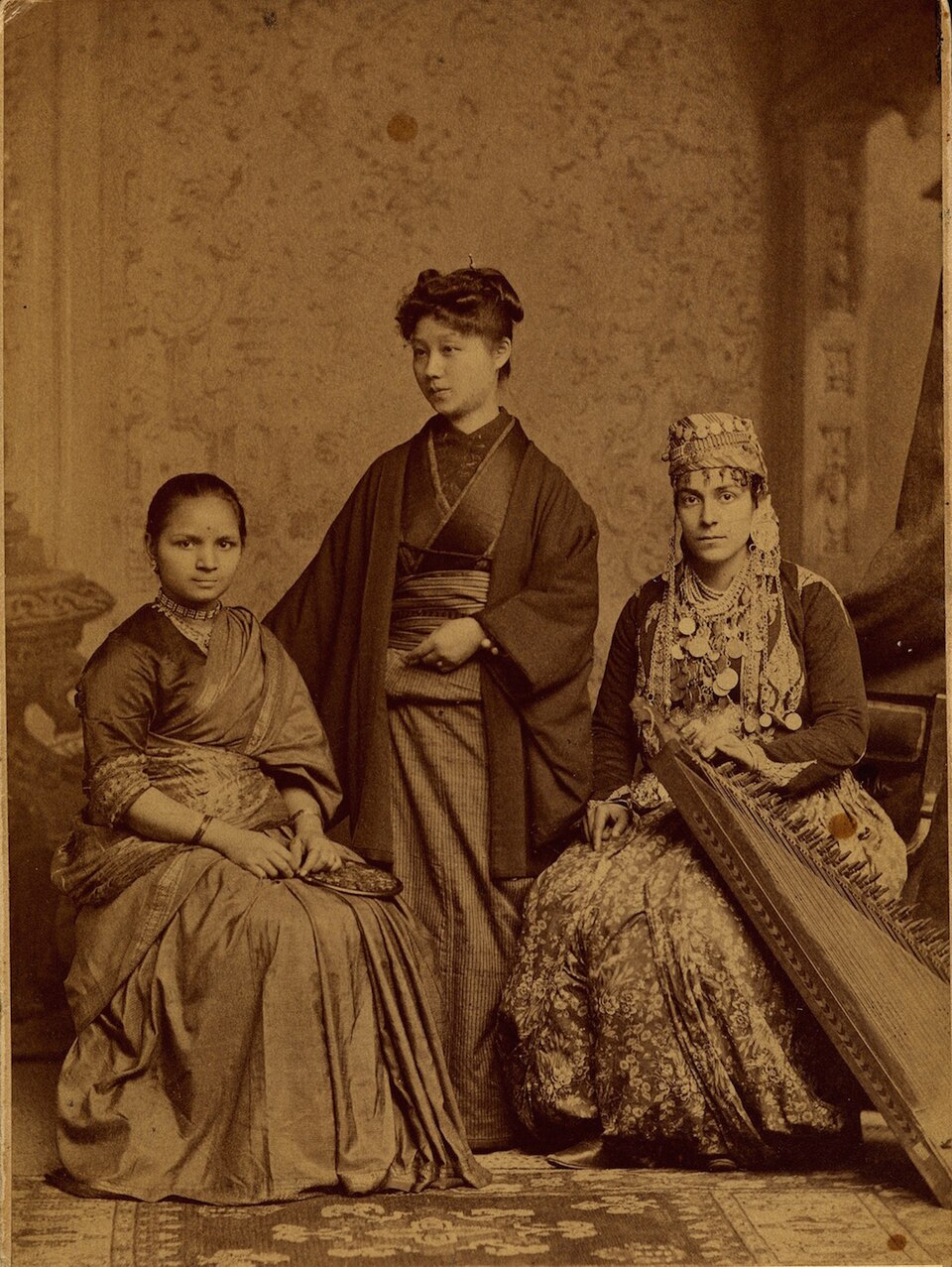
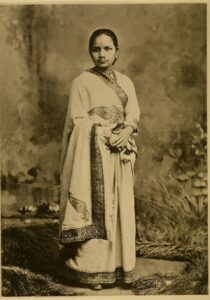
Anandi Gopal Joshi graduated from the Woman’s Medical College of Pennsylvania in 1886 at the age of 21, becoming the first Indian woman to earn a Western medical degree in the United States. Her thesis on obstetrics drew connections between American and Indian medical practice, reflecting an early exchange of medical knowledge across cultures. The achievement attracted international attention, including a congratulatory message from Queen Victoria. Joshi’s graduation established an early presence for South Asian women in American medicine and inspired generations of women to pursue medical education across national boundaries.
Related People
Anandi Gopal Joshi
Anandi Gopal Joshi
Anandi Gopal Joshi was a medical pioneer who became the first Indian woman to earn a Western medical degree, graduating from the Woman's Medical College of Pennsylvania in 1886 at the age of 21. Her thesis explored obstetrics in Hindu society, reflecting an early exchange of medical knowledge between India and the United States. At a time when few women pursued higher education, she overcame formidable social and cultural barriers to study medicine abroad. Her achievement inspired generations of women to pursue careers in medicine and strengthened early academic ties between the two countries.

Ani Dasgupta Appointed President of the World Resources Institute
Ani Dasgupta Appointed President of the World Resources Institute
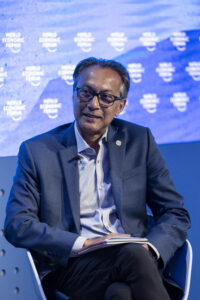
Ani Dasgupta became President and CEO of the World Resources Institute in 2021, placing an Indian American at the helm of one of the world’s leading environmental research and policy organizations. Under his leadership, WRI continued to shape US climate legislation, international climate negotiations, and sustainability policy through research and partnerships spanning more than 60 countries. His appointment reflected the growing leadership of Indian Americans in institutions guiding global environmental governance.
Related People
Ani Dasgupta
Ani Dasgupta
Ani Dasgupta is an environmental policy leader and urban planner. In 2021, he became President and CEO of the World Resources Institute, one of the world's leading environmental research organizations. His leadership has strengthened WRI's work on climate, sustainable cities, food systems, energy, and natural resources while advancing evidence-based solutions that influence environmental policy in the United States and around the world.

Archictecting the U.S. Hydrogen Economy (2023)
Archictecting the U.S. Hydrogen Economy (2023)
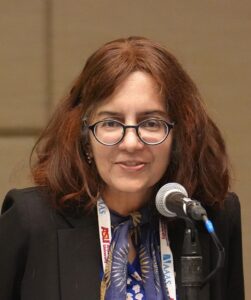
In October 2023, America’s heavy industries and transport corridors began a historic shift toward a post-fossil-fuel future with the launch of the Regional Clean Hydrogen Hubs (H2Hubs) program. Driven by pioneering clean-energy leader Dr. Sunita Satyapal, this $7 billion initiative established seven multi-state networks to manufacture, store, and deploy clean hydrogen at a massive industrial scale. By anchoring this clean energy transformation in heavy trucking, manufacturing, and chemical production, Dr. Satyapal helped permanently alter American infrastructure, proving that deep decarbonization was no longer a localized research project, but a tangible nationwide blueprint for environmental conservation.
Related People
Dr. Sunita Satyapal
Dr. Sunita Satyapal
Dr. Sunita Satyapal is an internationally recognized expert in hydrogen and fuel cells with over 30 years of experience across government, industry, and academia. Formerly the Director of the U.S. Department of Energy’s Hydrogen and Fuel Cell Technologies Office (HFTO), she led strategic research, development, and international partnerships involving more than 25 countries. Dr. Satyapal holds a Ph.D. from Columbia University and completed postdoctoral work at Cornell University. A holder of 10 patents with numerous publications, she has received prestigious honors, including the Meritorious and Distinguished U.S. Presidential Rank Awards. .

Aruna Masih Breaks Barriers on State Judiciary and Labor Law
Aruna Masih Breaks Barriers on State Judiciary and Labor Law
In 2023, Aruna Masih’s appointment to the Oregon Supreme Court expanded Indian American representation beyond the federal bench and into state courts, where the vast majority of American legal disputes are resolved. A former labor and civil rights attorney, she brought diaspora representation into both the judiciary and an area of law where it had been largely absent. Her appointment broadened the community’s legal footprint from nationally prominent federal courts to the state judiciaries most Americans interact with directly.
Related People

Aruna Masih
Aruna Masih
Aruna Masih is an American jurist and former labor and civil rights attorney. In 2023, she became the first Indian American, South Asian American, and Punjabi justice on the Oregon Supreme Court. Before joining the bench, she spent more than two decades representing employees, labor unions, and public sector clients in complex labor and pension law matters. Her appointment expanded Indian American representation in the state judiciary, where the vast majority of American legal disputes are resolved, and broadened the diaspora's influence beyond the federal courts.

Balamurali Ambati Becomes the World’s Youngest Doctor
Balamurali Ambati Becomes the World’s Youngest Doctor
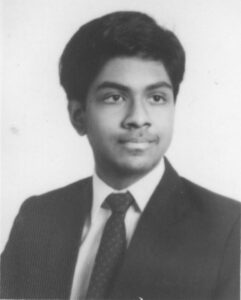
Balamurali Ambati graduated from the Mount Sinai School of Medicine at age 17, becoming the world’s youngest physician as recognized by Guinness World Records. His extraordinary achievement challenged conventional assumptions about age, academic readiness, and professional training in American medicine. By reaching one of the nation’s most demanding professions at an unprecedented age, Ambati demonstrated that exceptional talent could transcend traditional educational timelines. His record remains one of the most remarkable accomplishments in the history of medical education.
Related People
Balamurali Ambati
Balamurali Ambati
Balamurali Ambati built a distinguished career as an ophthalmologist, researcher, and educator, making significant contributions to vision science and medical innovation. Specializing in corneal diseases and surgery, he combined clinical practice with academic leadership and scientific research, earning recognition as a leading figure in American ophthalmology. Beyond his medical achievements, Ambati’s career has reflected a sustained commitment to advancing patient care, mentoring future physicians, and expanding the frontiers of ophthalmic research.

Baliga Invents the IGBT and Transforms Global Energy Efficiency
Baliga Invents the IGBT and Transforms Global Energy Efficiency
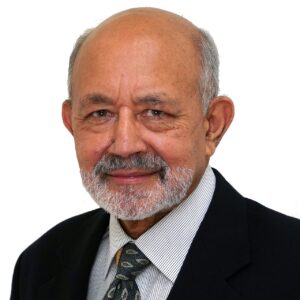
Every electric vehicle, renewable energy system, MRI machine, and high-speed rail network depends on efficient power-control technologies pioneered by B. Jayant Baliga. While working at General Electric, he invented the Insulated Gate Bipolar Transistor (IGBT), a breakthrough that dramatically improved the efficiency of power electronics. The technology became a global standard, reducing energy consumption across countless applications and helping lower carbon emissions on a massive scale.
Related People
B. Jayant Baliga
B. Jayant Baliga
B. Jayant Baliga is an electrical engineer best known for inventing the Insulated Gate Bipolar Transistor (IGBT), one of the most widely used power semiconductor devices in the world. While working at General Electric and later at North Carolina State University, he developed and helped commercialize technologies that revolutionized power electronics. The IGBT enabled more efficient control of electrical power in applications ranging from industrial equipment to transportation and renewable energy systems. Baliga holds more than 100 patents and is widely regarded as a pioneer in modern power semiconductor technology.

Banaji and Ambady Expose the Architecture of Unconscious Bias
Banaji and Ambady Expose the Architecture of Unconscious Bias
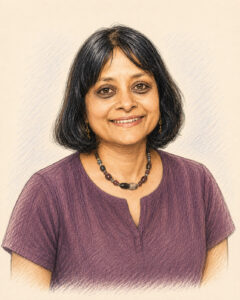
Mahzarin Banaji and Nalini Ambady transformed American psychology by revealing how unconscious judgments shape human behavior. In 1998, the Implicit Association Test, co-developed by Banaji, transformed how institutions measure unconscious bias across research, education, business, and law enforcement. Ambady’s pioneering research on “thin slices” demonstrated that people form remarkably consistent judgments from brief social encounters. Together, their work reshaped American understanding of bias, perception, and decision-making.
Related People

Mahzarin Banaji
Nalini Ambady
Mahzarin Banaji
Mahzarin Banaji is a social psychologist whose research transformed the understanding of unconscious bias. At Harvard University, she co-developed the Implicit Association Test, one of the most widely used tools for measuring implicit attitudes and stereotypes. Her work has influenced psychology, education, business, healthcare, and law, reshaping how institutions understand bias and decision-making. She co-authored the New York Times best-selling book Blindspot: Hidden Biases of Good People. In 2018, she received the U.S. Congress-backed Golden Goose Award, an honor recognizing scientists whose seemingly obscure, federally funded basic research ultimately yields significant, transformative benefits to society.
Nalini Ambady
Nalini Ambady was a social psychologist whose pioneering research revealed how people form rapid judgments from minimal social cues. Her influential studies on "thin slices" demonstrated that first impressions can be remarkably accurate while also reflecting unconscious bias. As a professor at Tufts University and Stanford University, Ambady transformed research on social perception, communication, and interpersonal behavior.

Bandi’s Research Shows Expanded Lung Cancer Screening Could Save 62,000 Lives
Bandi’s Research Shows Expanded Lung Cancer Screening Could Save 62,000 Lives
Dr. Priti Bandi published research in JAMA showing that expanding lung cancer screening to all eligible U.S. adults could prevent more than 62,000 deaths within five years. Her analysis exposed major gaps in access to early detection and demonstrated the life-saving potential of broader screening. The findings strengthened national efforts to expand insurance coverage and improve access to preventive care while informing discussions on cancer screening policy. Her work reinforced the critical role of evidence-based research in shaping strategies to reduce lung cancer mortality in the United States.
Related People

Dr. Priti Bandi
Dr. Priti Bandi
Dr. Priti Bandi is Scientific Director of Cancer Risk Factors and Screening Surveillance at the American Cancer Society. Her research focuses on improving access to cancer screening and reducing disparities in early detection across the United States. Through large-scale population studies, including influential research published in JAMA, she has demonstrated the life-saving potential of expanding lung cancer screening for eligible Americans. Her work has informed national discussions on cancer prevention, screening policy, and equitable access to early diagnosis.

Basanta Koomar Roy Becomes First Indian American Journalist in Mainstream US Press
Basanta Koomar Roy Becomes First Indian American Journalist in Mainstream US Press
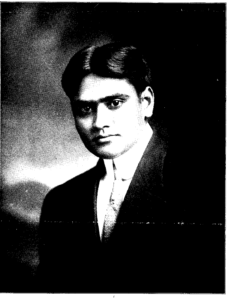
Basanta Koomar Roy emerged as one of the earliest Indian voices in mainstream American journalism by writing directly for publications such as The Open Court and The Independent. At a time when most Americans encountered India through British colonial perspectives, his reporting offered an independent viewpoint on politics, culture, and empire. Beyond journalism, he defended Indian immigrants facing deportation during a period of intense anti-Asian discrimination. Together, his writing and legal advocacy helped establish an early public voice for the Indian diaspora and broadened the perspectives available to American readers.
Related People
Basanta Koomar Roy
Basanta Koomar Roy
Basanta Koomar Roy was a journalist, writer, and immigrant advocate who helped introduce Indian perspectives to American readers in the early twentieth century. Writing for mainstream publications, he challenged imperial narratives and encouraged Americans to engage directly with Indian political and social thought. He also defended Indian immigrants facing deportation during an era of exclusionary immigration policies. By combining journalism with public advocacy, Roy became an early voice for the Indian diaspora and helped lay the foundations for Indian American participation in the nation's media and civic life.

Baseball: First Indian Players Sign MLB Contracts
Baseball: First Indian Players Sign MLB Contracts
Rinku Singh and Dinesh Patel became the first Indian-born players to sign contracts with a Major League Baseball organization after winning a nationwide pitching competition in India. Signed by the Pittsburgh Pirates in 2008, their journey introduced baseball to new audiences and demonstrated the sport’s expanding global reach. Their remarkable story later inspired Disney’s Million Dollar Arm, bringing the Indian American and Indian sporting experience to mainstream American popular culture.
Related People

Rinku Singh

Dinesh Patel
Rinku Singh
Rinku Singh is a former professional baseball player and professional wrestler. In 2008, he became one of the first Indian-born players to sign with a Major League Baseball organization after joining the Pittsburgh Pirates. His journey from rural India to American professional sports inspired Disney's Million Dollar Arm, introducing baseball to new audiences. He later pursued a successful career in WWE, continuing to expand the visibility of athletes of Indian origin in American sports and entertainment.
Dinesh Patel
Dinesh Patel is a former professional baseball player. In 2008, he became one of the first Indian-born players to sign with a Major League Baseball organization after earning a contract with the Pittsburgh Pirates through a nationwide pitching competition in India. His remarkable journey demonstrated baseball's expanding global reach and inspired the Disney film Million Dollar Arm, which brought his story to audiences around the world.

Basketball: Indian-Americans Break New Ground in NBA Ownership
Basketball: Indian-Americans Break New Ground in NBA Ownership
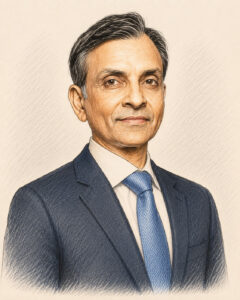
Indian Americans reached new milestones in professional basketball leadership during the 2010s. In 2010, Vivek Ranadive became the first person of Indian descent to co-own an NBA franchise, taking a stake in the Golden State Warriors. In 2013, he advanced further by purchasing majority control of the Sacramento Kings, becoming the league’s first Indian-born majority owner and keeping the franchise in Sacramento after a relocation bid. As owner, Ranadive championed analytics-driven team building and technology investment, helping reshape how NBA franchises approach both business operations and player development.
Related People
Vivek Ranadive
Vivek Ranadive
Vivek Ranadivé is an Indian American entrepreneur, author, and professional sports team owner. Born in Mumbai, he moved to the United States at 16 to attend MIT, earning bachelor's and master's degrees in electrical engineering before completing an MBA at Harvard Business School as a Baker Scholar. In 1986, he founded Teknekron Software Systems, developing technology that helped automate Wall Street's trading floors. He later founded TIBCO Software, pioneering real-time computing for businesses worldwide. In 2013, Ranadivé became the first Indian-born majority owner of an NBA franchise when he led the purchase of the Sacramento Kings.
Basketball: The First Indian American Head Coach in WNBA
Basketball: The First Indian American Head Coach in WNBA
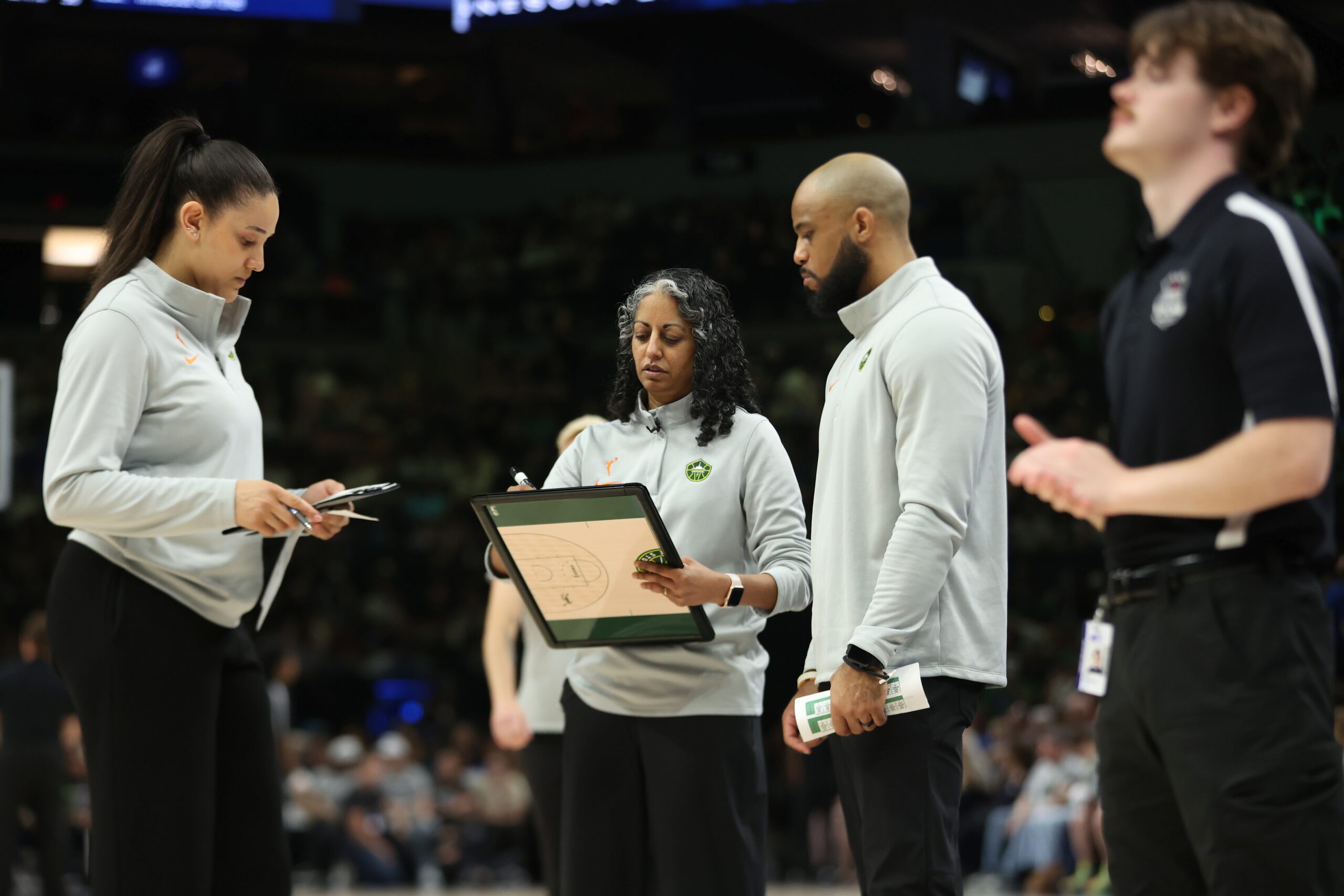
In October 2025, Sonia Raman achieved a historic milestone by being named the head coach of the Seattle Storm, officially becoming the first person of Indian descent to serve as a head coach in the WNBA. This landmark appointment marked a significant progression in her trailblazing career. Prior to leading the Storm, Raman had already shattered barriers in 2020 when she was hired as an assistant coach for the Memphis Grizzlies. That role made her the first Indian-American woman to coach in the NBA, where she spent years refining her expertise in scouting, player development, and analytics.
Related People

Sonia Raman
Sonia Raman
Sonia Raman is an American basketball coach. In 2020, she became the first Indian American woman appointed as an assistant coach in the National Basketball Association, joining the Memphis Grizzlies. Previously, she built one of the nation's most successful women's collegiate basketball programs at the Massachusetts Institute of Technology. Her appointment marked a milestone for Indian American representation in professional coaching and expanded opportunities for women in the NBA.
Bengali Harlem Bridges Cultures in Early America
Bengali Harlem Bridges Cultures in Early America
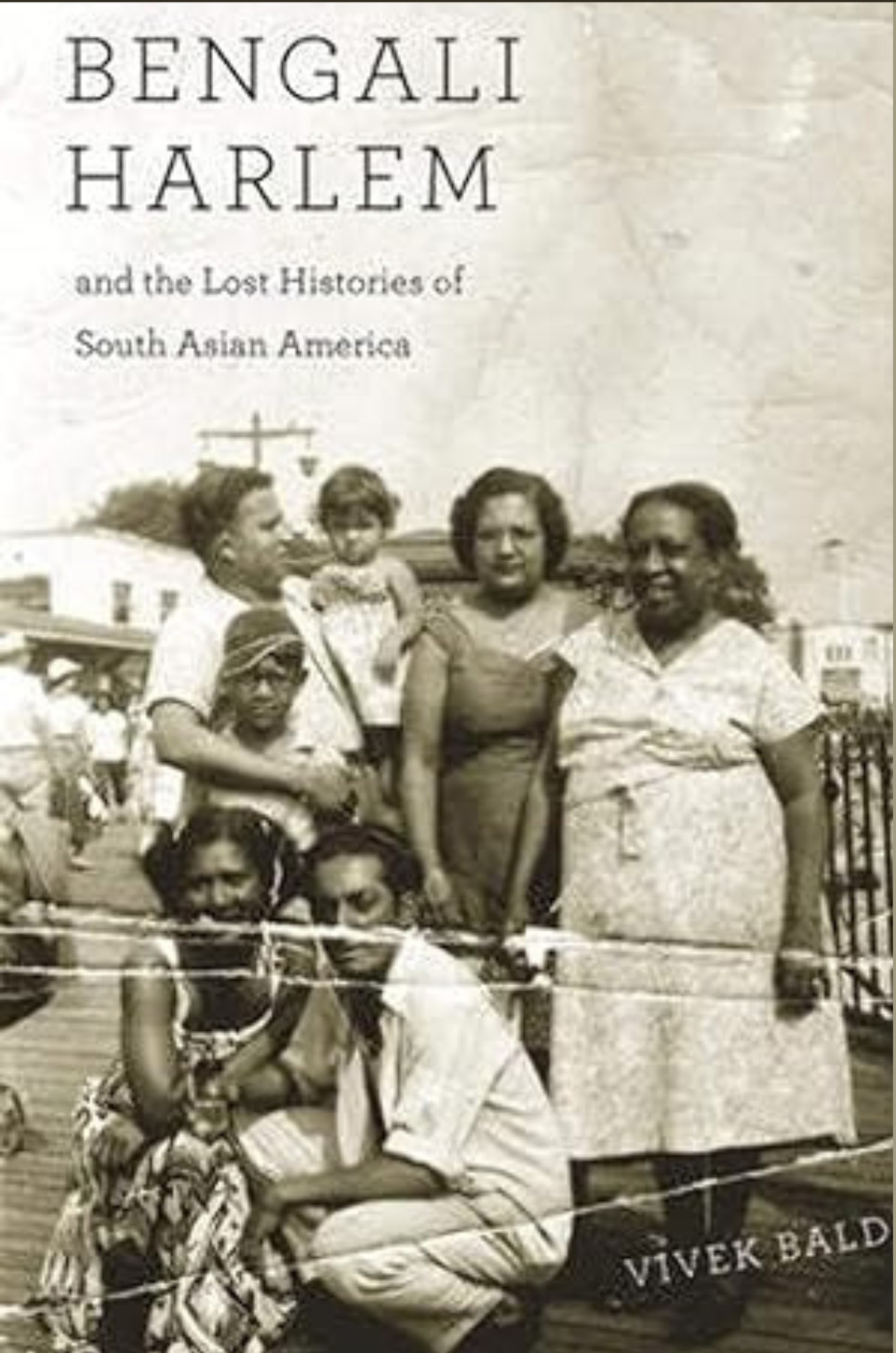
Long before the large-scale migrations of the late 20th century, these Bengali pioneers—silk traders, peddlers, and laborers—carved out existence within the margins of a racially exclusionary America. Settling in neighborhoods such as Harlem and the Lower East Side, where housing and economic opportunities were more accessible despite widespread discrimination, they built lives alongside African American and Latina women, forming interethnic households that bridged vast cultural divides. These families fostered a unique social milieu, creating a foundational, often overlooked community that defied the strict racial barriers of the era, establishing deep roots in New York’s urban fabric. They established some of the nation’s earliest Indian restaurants, which became cross-cultural gathering places for neighborhood residents, artists, writers, musicians, and political activists.

Berklee Indian Ensemble Globalizes Diaspora Music
Berklee Indian Ensemble Globalizes Diaspora Music
The creation of the Berklee Indian Ensemble in 2011 brought Indian music into the heart of one of America’s most influential contemporary music institutions. Based at Berklee College of Music, the ensemble blended Indian classical traditions with global musical forms and introduced them to new audiences through performances, recordings, and viral online videos viewed by millions. Its success demonstrated growing American interest in Indian musical traditions beyond diaspora communities and helped legitimize their place within formal music education. A Grammy nomination in 2023 affirmed the ensemble’s role in expanding the boundaries of contemporary American musical culture.
Related People

Annette Philip
Annette Philip
Annette Philip is a vocalist, educator, and academic leader who helped institutionalize Indian music within American higher education. In 2011, she founded the Berklee Indian Ensemble at the Berklee College of Music, creating the first program of its kind at a major American music institution. Under her leadership, the ensemble brought Indian classical and contemporary traditions into dialogue with global musical forms, reaching millions through performances and digital media. Philip's work expanded opportunities for South Asian musicians, reshaped music education, and helped establish Indian music as a recognized part of America's contemporary musical landscape.

Bhardwaj’s Dendritic Cell Research Founds Cancer Immunotherapy
Bhardwaj’s Dendritic Cell Research Founds Cancer Immunotherapy
Immunologist Dr. Nina Bhardwaj pioneered research on how human dendritic cells activate the immune system to recognize and fight cancer. Her discoveries transformed scientific understanding of tumor immunity and helped lay the foundation for dendritic cell-based immunotherapies, including the development of therapeutic cancer vaccines. By translating basic immunology into clinical applications, her work accelerated one of the most promising fields in modern oncology. It reshaped cancer treatment by harnessing the body’s own immune system to combat disease.
Related People
Dr. Nina Bhardwaj
Dr. Nina Bhardwaj
Dr. Nina Bhardwaj is an immunologist whose pioneering research on human dendritic cells transformed understanding of how the immune system recognizes and attacks cancer. At the Icahn School of Medicine at Mount Sinai, she helped bridge basic immunology and clinical medicine, laying the scientific foundation for dendritic cell-based cancer immunotherapies and therapeutic vaccines. Her work has advanced one of the most promising fields in modern oncology. In recognition of her contributions to medicine, she was elected to the National Academy of Medicine in 2024.

Bhaumik’s Excimer Laser Enables LASIK Eye Surgery
Bhaumik’s Excimer Laser Enables LASIK Eye Surgery
At Northrop Corporate Research Laboratory, physicist Mani Lal Bhaumik led the development of the first efficient excimer laser, creating the precision ultraviolet technology that later made LASIK eye surgery possible. After receiving FDA approval in the 1990s, LASIK transformed vision correction for tens of millions of Americans and hundreds of millions of people worldwide. Bhaumik’s work demonstrated how fundamental physics research could produce one of the most widely used medical procedures of the modern era, linking American scientific innovation with a lasting improvement in human health and quality of life.
Related People
Mani Lal Bhaumik
Mani Lal Bhaumik
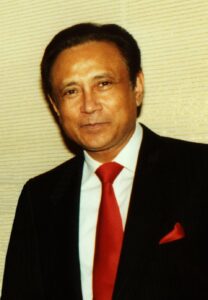
Mani Lal Bhaumik is a physicist whose pioneering work at Northrop Corporate Research Laboratory led to the development of the first efficient excimer laser in 1973. Originally designed for scientific and industrial applications, the technology became the foundation for LASIK and other laser eye surgeries, restoring vision to millions of people worldwide. Bhaumik's research exemplified the power of fundamental physics to transform medicine, translating advances in laser science into one of the most successful and widely performed medical procedures of the modern era.

Bobby Ghosh Named First Non-American World Editor of Time Magazine
Bobby Ghosh Named First Non-American World Editor of Time Magazine
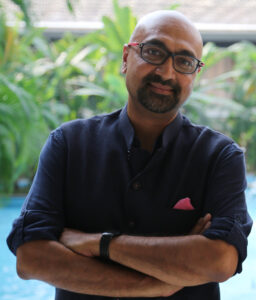
International reporting assumed new prominence at Time magazine when Bobby Ghosh became its first non-American World Editor. Having reported extensively from conflict zones including Iraq, he brought first-hand experience to one of the world’s most influential news publications. His appointment reflected the increasingly global character of American journalism and placed a journalist of Indian origin in one of the highest editorial roles overseeing international news. Ghosh helped shape how millions of readers understood war, diplomacy, and global affairs.
Related People
Aparisim “Bobby” Ghosh
Aparisim “Bobby” Ghosh
Bobby Ghosh is a journalist and foreign correspondent whose reporting has shaped American understanding of global affairs. After covering conflicts across the Middle East as Time magazine's Baghdad bureau chief, he became the publication's first non-American World Editor. His leadership reflected the increasingly international character of American journalism while bringing deep experience in foreign reporting to one of the country's most influential news magazines. Ghosh has remained a prominent voice on international politics and global affairs.
Bobby Jindal: First Indian American Governor
Bobby Jindal: First Indian American Governor
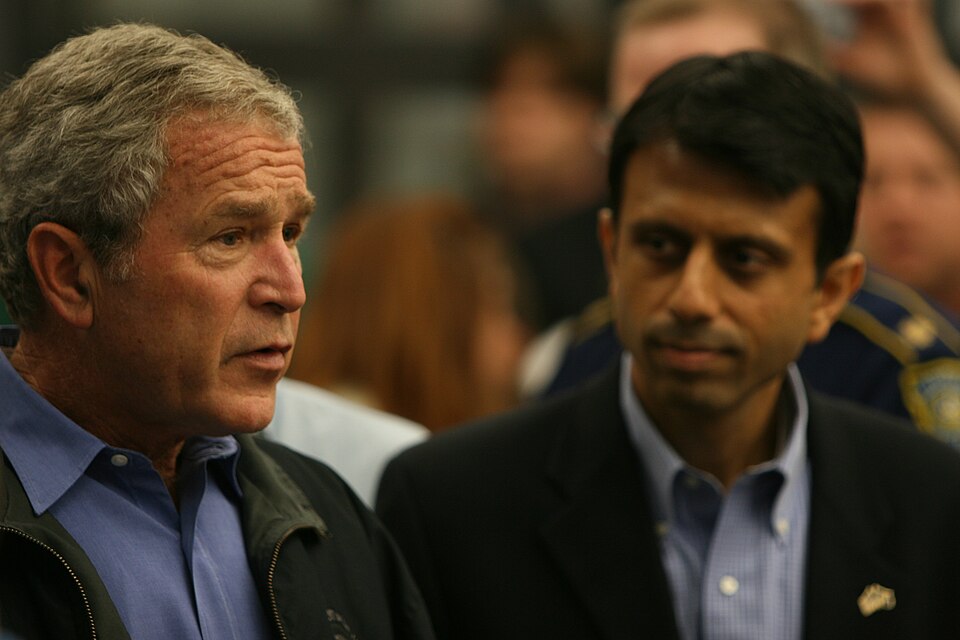
Bobby Jindal’s election as Governor of Louisiana in 2007 marked another milestone in the political rise of Indian Americans. As the first Indian American to serve as a U.S. governor, he demonstrated that a candidate of Indian origin could win statewide executive office in the Deep South by building a broad electoral coalition. Serving two terms, Jindal oversaw one of the nation’s most visible governorships and later sought the Republican presidential nomination. His election further expanded the presence of Indian Americans at the highest levels of American public life.
Related People
Bobby Jindal
Bobby Jindal
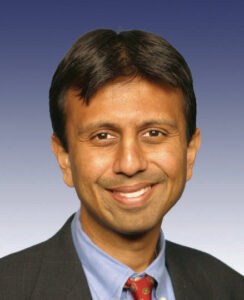
Bobby Jindal is an American politician who became the first Indian American elected governor of a U.S. state when he won Louisiana's governorship in 2007. Before serving two terms as governor, he represented Louisiana in the U.S. House of Representatives, ending a more than forty-year absence of Indian Americans in Congress since Dalip Singh Saund. A leading figure in the Republican Party, Jindal launched a campaign for the 2016 presidential nomination. His career demonstrated the ability of Americans of Indian origin to win statewide office in one of the nation's most politically distinctive regions.
People
The people behind the moments. Explore their stories.
Rachel Paulose
Rachel Paulose
Rachel Paulose is an American lawyer and former U.S. Attorney for the District of Minnesota. In 2006, she became the first Indian American woman nominated by a president and confirmed by the U.S. Senate to any federal office. As the chief federal prosecutor for Minnesota, she oversaw criminal prosecutions and represented the United States in major civil litigation. Her Senate confirmation marked a milestone for Indian American women in the federal government and expanded diaspora representation in senior law enforcement leadership.

Law & Justice
Akhay Kumar Mozumdar
Akhay Kumar Mozumdar
Akshay Kumar Mozumdar (1881–1953) was a prominent Indian American spiritual teacher and a key figure in the early 20th-century New Thought Movement. Born in India, he immigrated to the U.S. in 1904, gaining citizenship in 1913. His life became a legal landmark when his citizenship was revoked following the United States v. Bhagat Singh Thind ruling. Despite this systemic discrimination, Mozumdar continued his work, blending Eastern philosophy with Western metaphysics. Following the passage of the Luce–Celler Act, he successfully regained his American citizenship in 1950. He remained an influential lecturer and author until his death in San Diego.

Immigration & Civil Rights
Suhas Patil
Suhas Patil
Suhas Patil combined engineering expertise with entrepreneurial success to found Cirrus Logic, building it into a major semiconductor company with the backing of venture capital. Having navigated Silicon Valley's startup ecosystem firsthand, he helped establish TiE in 1992 to expand opportunities for immigrant entrepreneurs. Through mentorship, leadership, and community-building, he worked to create structured pathways through which founders could access knowledge, professional networks, and investment. His contributions extended beyond his own company, helping strengthen the entrepreneurial infrastructure that supported generations of Indian American technology leaders.

Entrepreneurship & Business
Kamaladevi Chattopadhyay
Kamaladevi Chattopadhyay
Kamaladevi Chattopadhyay was an Indian freedom fighter, social reformer, and cultural ambassador. During speaking tours across the United States, she introduced American audiences to India's independence movement while advocating for democracy, women's rights, and international cooperation. Her lectures helped broaden American understanding of India's political aspirations and strengthened ties between Indian and American civil society.
Immigration & Civil Rights
Asra Nomani
Asra Nomani
Asra Nomani is a journalist, author, and educator whose reporting has focused on terrorism, national security, and civil rights. She co-founded the Pearl Project at Georgetown University, an investigative initiative that reexamined the kidnapping and murder of journalist Daniel Pearl. Through reporting and teaching, Nomani has championed investigative journalism as a tool for accountability while encouraging students to pursue complex international stories.

Journalism & Media
Kala Bagai
Kala Bagai
Born in 1893 in Amritsar, Punjab, Kala Bagai arrived in San Francisco in 1915 as one of the few South Asian women in the U.S. After being barred from her own home in Berkeley by racist neighbors and witnessing her husband’s despair following the revocation of his citizenship, she navigated immense personal tragedy with quiet tenacity. She raised three sons as a widowed immigrant and later remarried. Throughout the 1950s and 1960s, she transformed her home into a central hub for new South Asian immigrants. She hosted cultural events, receptions, and benefits, providing a welcoming environment for newcomers who were often isolated in a country that had historically treated them with hostility. The Smithsonian described her as "a life-long advocate for immigrants and a mother figure among South Asian communities in California". Her legacy was officially recognized in 2021 when Berkeley renamed a downtown street "Kala Bagai Way," the first in the city honoring an Asian American
Immigration & Civil Rights
C.K. Prahalad
C.K. Prahalad
C.K. Prahalad was a management scholar whose ideas reshaped business strategy around the world. As a professor at the University of Michigan, he co-authored The Core Competence of the Corporation, one of the most influential articles in the history of Harvard Business Review. His research on innovation, competitive strategy, and emerging markets transformed management education and corporate leadership.

Education & Intellectual Life
Sirisha Bandla
Sirisha Bandla
Sirisha Bandla is an aeronautical engineer and space industry executive who became one of the first Indian-born women to reach space. In 2021, she flew aboard VSS Unity as part of a commercial spaceflight mission conducted by Virgin Galactic. Beyond her flight, Bandla has played a significant role in advancing the commercial space sector through leadership and advocacy. Her career reflects the expanding opportunities created by private spaceflight and the growing participation of the Indian diaspora in the future of space exploration.

Science & Technology
Dr. Suvas Desai
Dr. Suvas Desai
Dr. Suvas Desai is an Indian American physician and long-time leader of the American Association of Physicians of Indian Origin. He helped expand the organization's national influence through advocacy, professional development, and engagement with the American Medical Association. His leadership contributed to reforms that strengthened the representation of international medical graduates and reinforced AAPI's role as a leading voice for physicians of Indian origin in the United States.

Healthcare & Medicine
Priyanka Ganjoo
Priyanka Ganjoo
Priyanka Ganjoo is the founder and CEO of Kulfi Beauty, a trailblazing cosmetics brand designed to celebrate and represent South Asian complexions. Before launching her entrepreneurial journey in 2021, Ganjoo spent years building a robust foundation in corporate beauty strategy, product development, and merchandising at industry giants like Estée Lauder and Ipsy. Driven by the chronic lack of inclusive undertones in mainstream makeup, she developed highly acclaimed, cult-favorite formulas tailored for marginalized skin tones. Ganjoo made major historical strides for cultural representation in retail by establishing Kulfi as the first South Asian-inspired makeup brand carried by Sephora.

Arts & Creative Expression
Rachel Paulose
Rachel Paulose
Rachel Paulose is an American lawyer and former U.S. Attorney for the District of Minnesota. In 2006, she became the first Indian American woman nominated by a president and confirmed by the U.S. Senate to any federal office. As the chief federal prosecutor for Minnesota, she oversaw criminal prosecutions and represented the United States in major civil litigation. Her Senate confirmation marked a milestone for Indian American women in the federal government and expanded diaspora representation in senior law enforcement leadership.
Law & Justice
Akhay Kumar Mozumdar
Akhay Kumar Mozumdar
Akshay Kumar Mozumdar (1881–1953) was a prominent Indian American spiritual teacher and a key figure in the early 20th-century New Thought Movement. Born in India, he immigrated to the U.S. in 1904, gaining citizenship in 1913. His life became a legal landmark when his citizenship was revoked following the United States v. Bhagat Singh Thind ruling. Despite this systemic discrimination, Mozumdar continued his work, blending Eastern philosophy with Western metaphysics. Following the passage of the Luce–Celler Act, he successfully regained his American citizenship in 1950. He remained an influential lecturer and author until his death in San Diego.
Immigration & Civil Rights
Suhas Patil
Suhas Patil
Suhas Patil combined engineering expertise with entrepreneurial success to found Cirrus Logic, building it into a major semiconductor company with the backing of venture capital. Having navigated Silicon Valley's startup ecosystem firsthand, he helped establish TiE in 1992 to expand opportunities for immigrant entrepreneurs. Through mentorship, leadership, and community-building, he worked to create structured pathways through which founders could access knowledge, professional networks, and investment. His contributions extended beyond his own company, helping strengthen the entrepreneurial infrastructure that supported generations of Indian American technology leaders.
Entrepreneurship & Business
Kamaladevi Chattopadhyay
Kamaladevi Chattopadhyay
Kamaladevi Chattopadhyay was an Indian freedom fighter, social reformer, and cultural ambassador. During speaking tours across the United States, she introduced American audiences to India's independence movement while advocating for democracy, women's rights, and international cooperation. Her lectures helped broaden American understanding of India's political aspirations and strengthened ties between Indian and American civil society.
Immigration & Civil Rights
Asra Nomani
Asra Nomani
Asra Nomani is a journalist, author, and educator whose reporting has focused on terrorism, national security, and civil rights. She co-founded the Pearl Project at Georgetown University, an investigative initiative that reexamined the kidnapping and murder of journalist Daniel Pearl. Through reporting and teaching, Nomani has championed investigative journalism as a tool for accountability while encouraging students to pursue complex international stories.
Journalism & Media
Kala Bagai
Kala Bagai
Born in 1893 in Amritsar, Punjab, Kala Bagai arrived in San Francisco in 1915 as one of the few South Asian women in the U.S. After being barred from her own home in Berkeley by racist neighbors and witnessing her husband’s despair following the revocation of his citizenship, she navigated immense personal tragedy with quiet tenacity. She raised three sons as a widowed immigrant and later remarried. Throughout the 1950s and 1960s, she transformed her home into a central hub for new South Asian immigrants. She hosted cultural events, receptions, and benefits, providing a welcoming environment for newcomers who were often isolated in a country that had historically treated them with hostility. The Smithsonian described her as "a life-long advocate for immigrants and a mother figure among South Asian communities in California". Her legacy was officially recognized in 2021 when Berkeley renamed a downtown street "Kala Bagai Way," the first in the city honoring an Asian American
Immigration & Civil Rights
C.K. Prahalad
C.K. Prahalad
C.K. Prahalad was a management scholar whose ideas reshaped business strategy around the world. As a professor at the University of Michigan, he co-authored The Core Competence of the Corporation, one of the most influential articles in the history of Harvard Business Review. His research on innovation, competitive strategy, and emerging markets transformed management education and corporate leadership.
Education & Intellectual Life
Sirisha Bandla
Sirisha Bandla
Sirisha Bandla is an aeronautical engineer and space industry executive who became one of the first Indian-born women to reach space. In 2021, she flew aboard VSS Unity as part of a commercial spaceflight mission conducted by Virgin Galactic. Beyond her flight, Bandla has played a significant role in advancing the commercial space sector through leadership and advocacy. Her career reflects the expanding opportunities created by private spaceflight and the growing participation of the Indian diaspora in the future of space exploration.
Science & Technology
Dr. Suvas Desai
Dr. Suvas Desai
Dr. Suvas Desai is an Indian American physician and long-time leader of the American Association of Physicians of Indian Origin. He helped expand the organization's national influence through advocacy, professional development, and engagement with the American Medical Association. His leadership contributed to reforms that strengthened the representation of international medical graduates and reinforced AAPI's role as a leading voice for physicians of Indian origin in the United States.
Healthcare & Medicine
Priyanka Ganjoo
Priyanka Ganjoo
Priyanka Ganjoo is the founder and CEO of Kulfi Beauty, a trailblazing cosmetics brand designed to celebrate and represent South Asian complexions. Before launching her entrepreneurial journey in 2021, Ganjoo spent years building a robust foundation in corporate beauty strategy, product development, and merchandising at industry giants like Estée Lauder and Ipsy. Driven by the chronic lack of inclusive undertones in mainstream makeup, she developed highly acclaimed, cult-favorite formulas tailored for marginalized skin tones. Ganjoo made major historical strides for cultural representation in retail by establishing Kulfi as the first South Asian-inspired makeup brand carried by Sephora.
Arts & Creative Expression
Methodology
This collection spans 15 categories of American life and was built through a rigorous research and editorial process, with external reviewers engaged to validate the final selection. It is not comprehensive.
Inclusion on this project reflects historical significance and influence, whether those contributions are viewed positively, negatively, or somewhere in between. The moments also reflect the historical record, which has not always documented or recognized contributions equally across genders, communities, and regions.
There are countless more stories of contribution, courage, and impact that deserve to be told. These 250 moments are a beginning, not a boundary. The story of what people of Indian origin have given to this country is still being written, and the most consequential chapters may be yet to come.
About the Project
As the United States marks its 250th anniversary, Indiaspora presents 250 at 250: The Indian American Story, a curated collection of 250 defining moments shaped by people of Indian origin across American life. From the sciences to the arts, from courtrooms to playing fields, from Silicon Valley to the Senate floor, these moments reflect a diaspora that has helped build, challenge, and reimagine the nation it calls home.
This project reflects the editorial team’s research and judgment at the time of publication. If you believe a significant moment or individual has been overlooked, please let us know.